What you'll learn
Six things, in the order the game asks you to know them — played out with the real Proving Grounds starter decks.
-
 01
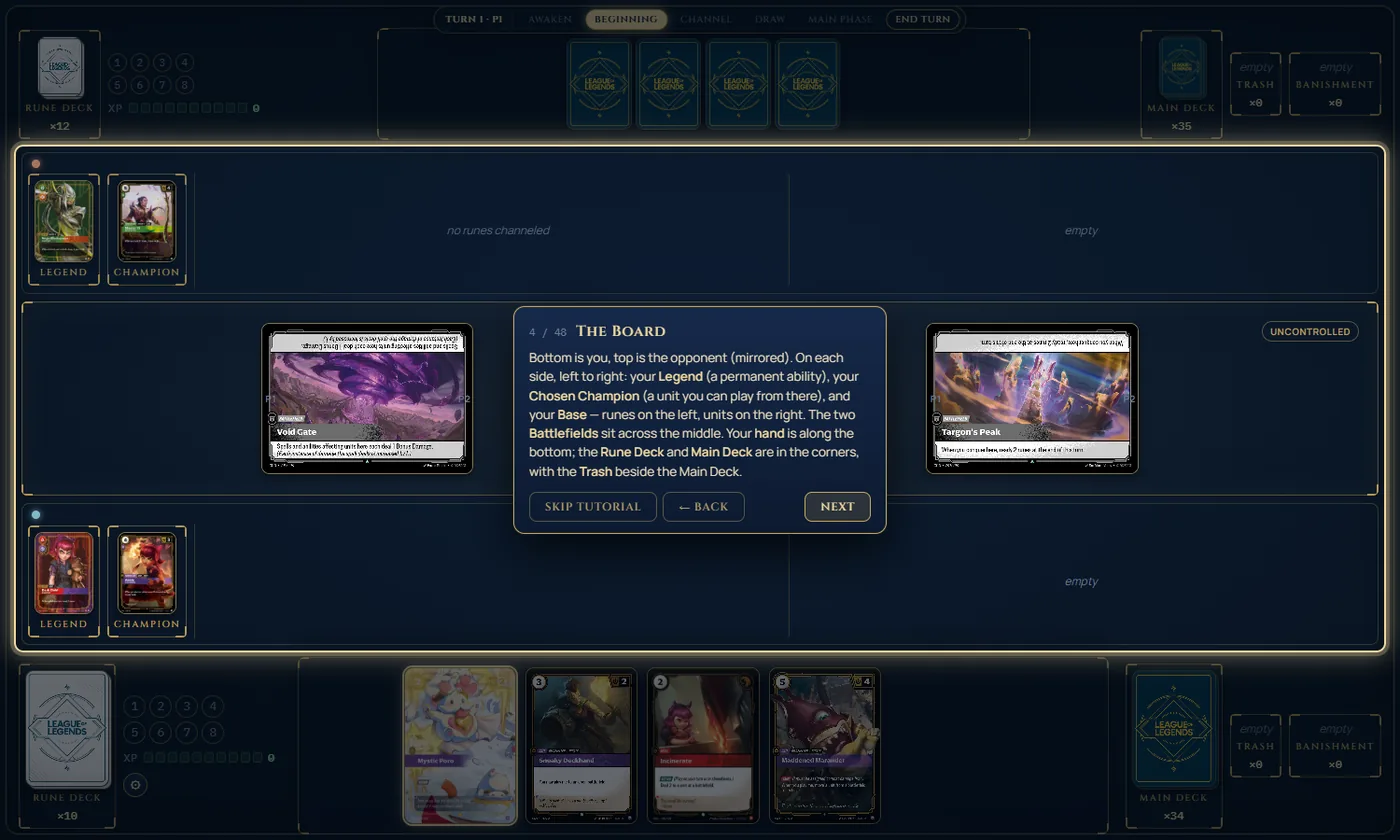
01The Board
Legend, Champion, Base, Hand, Decks and Trash, and the two Battlefields you fight over.
-
 02
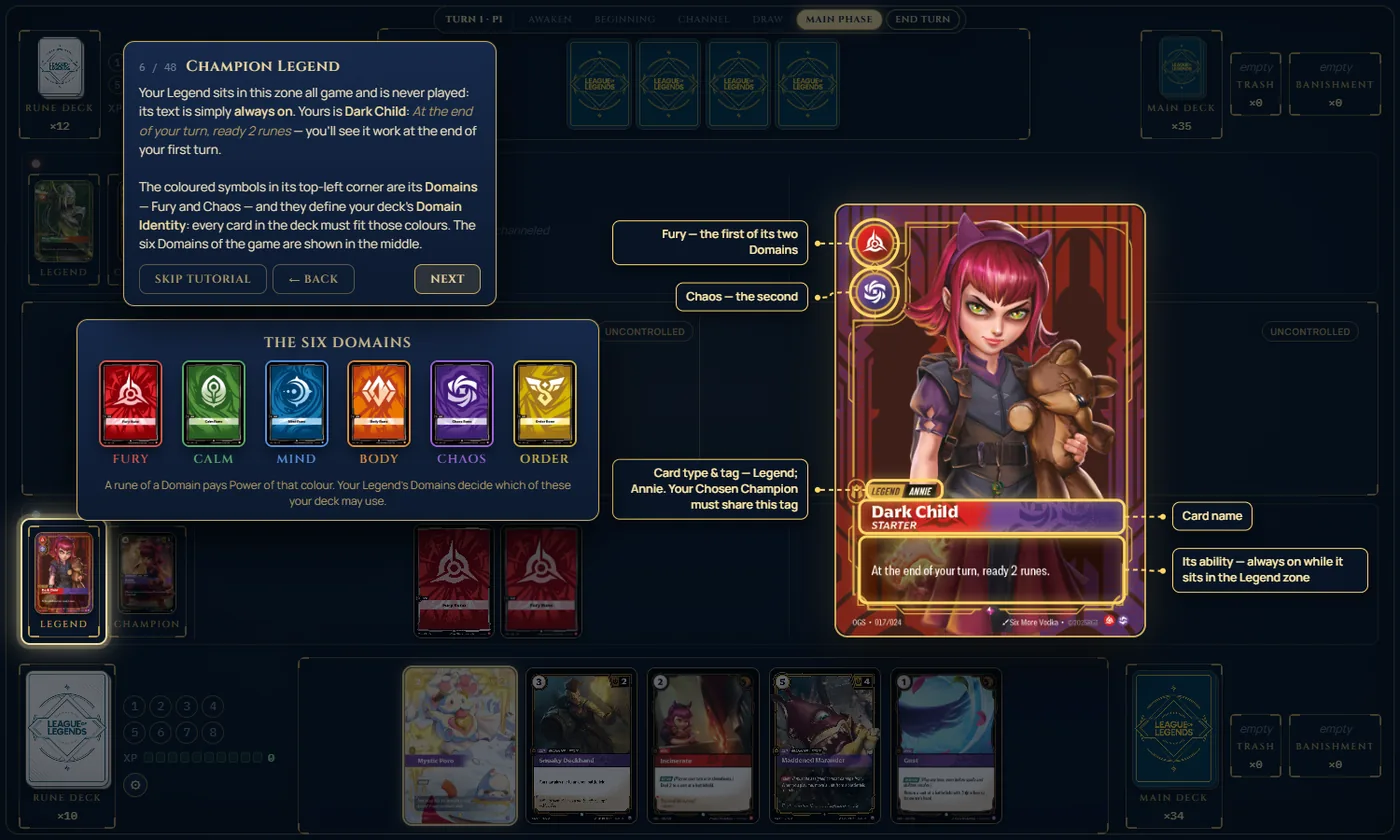
02The Turn
Awaken, Beginning, Channel, Draw, the Main Phase and End Turn — and how your Legend and the Battlefields’ own text change them.
-
 03
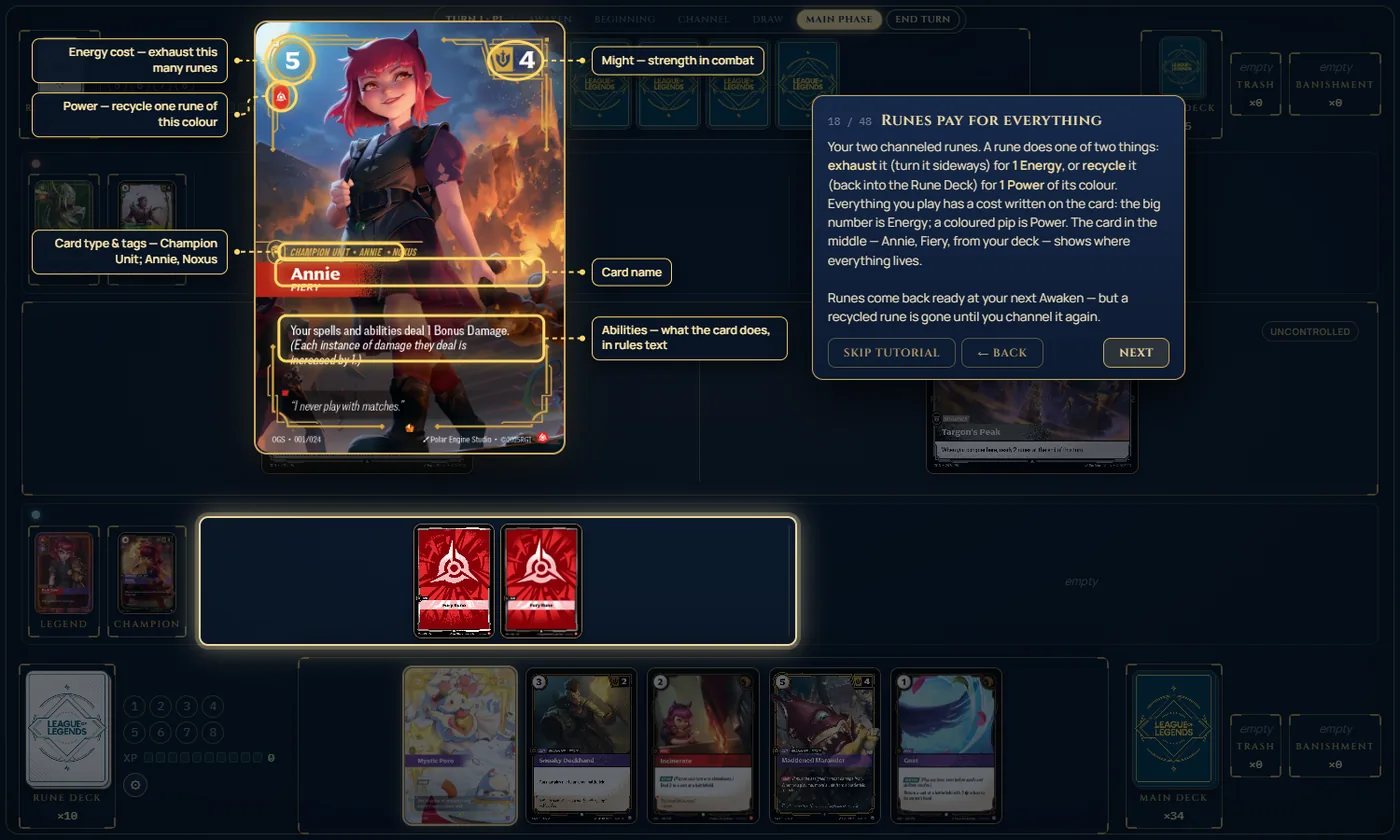
03Runes
Energy and Power, exhausting and recycling, and how a card's cost is written.
-
 04
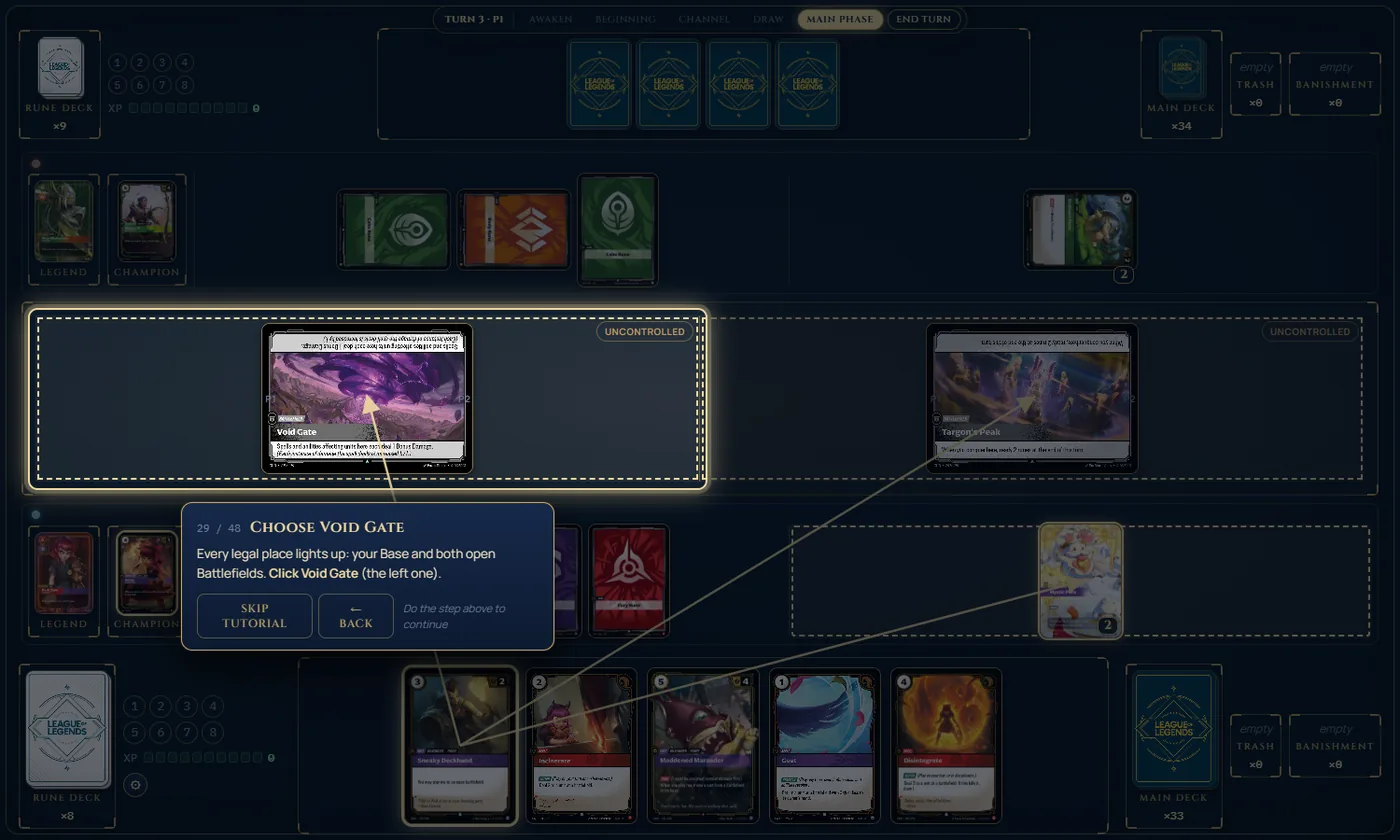
04Playing and Moving
Units and spells, paying for them, playing straight to an open Battlefield, and moving there alone or as a group.
-
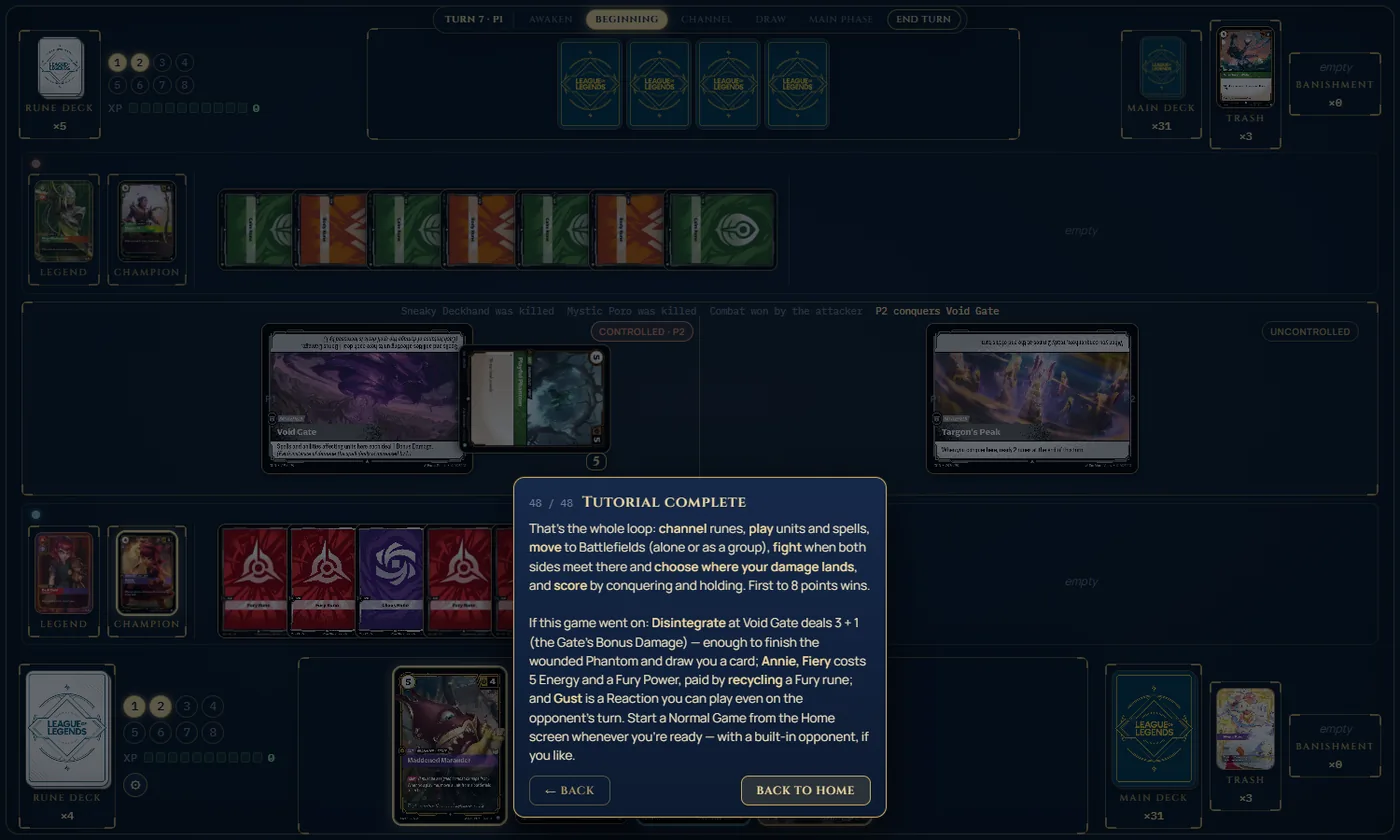 05
05Scoring
Conquer and Hold, and the race to 8 points.
-
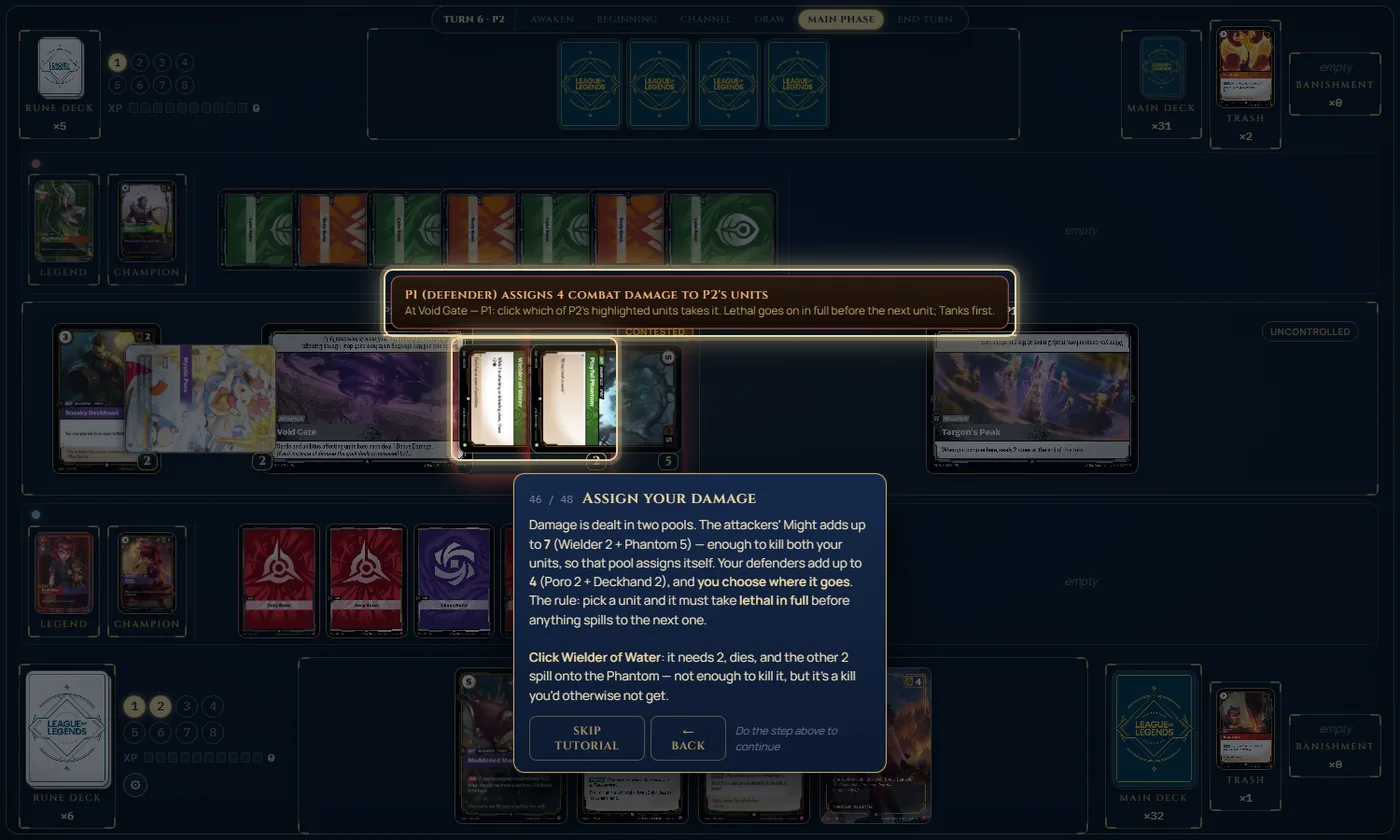 06
06The Chain and Combat
Responding to abilities and spells, choices made as they resolve, the Showdown, and choosing where your combat damage lands.
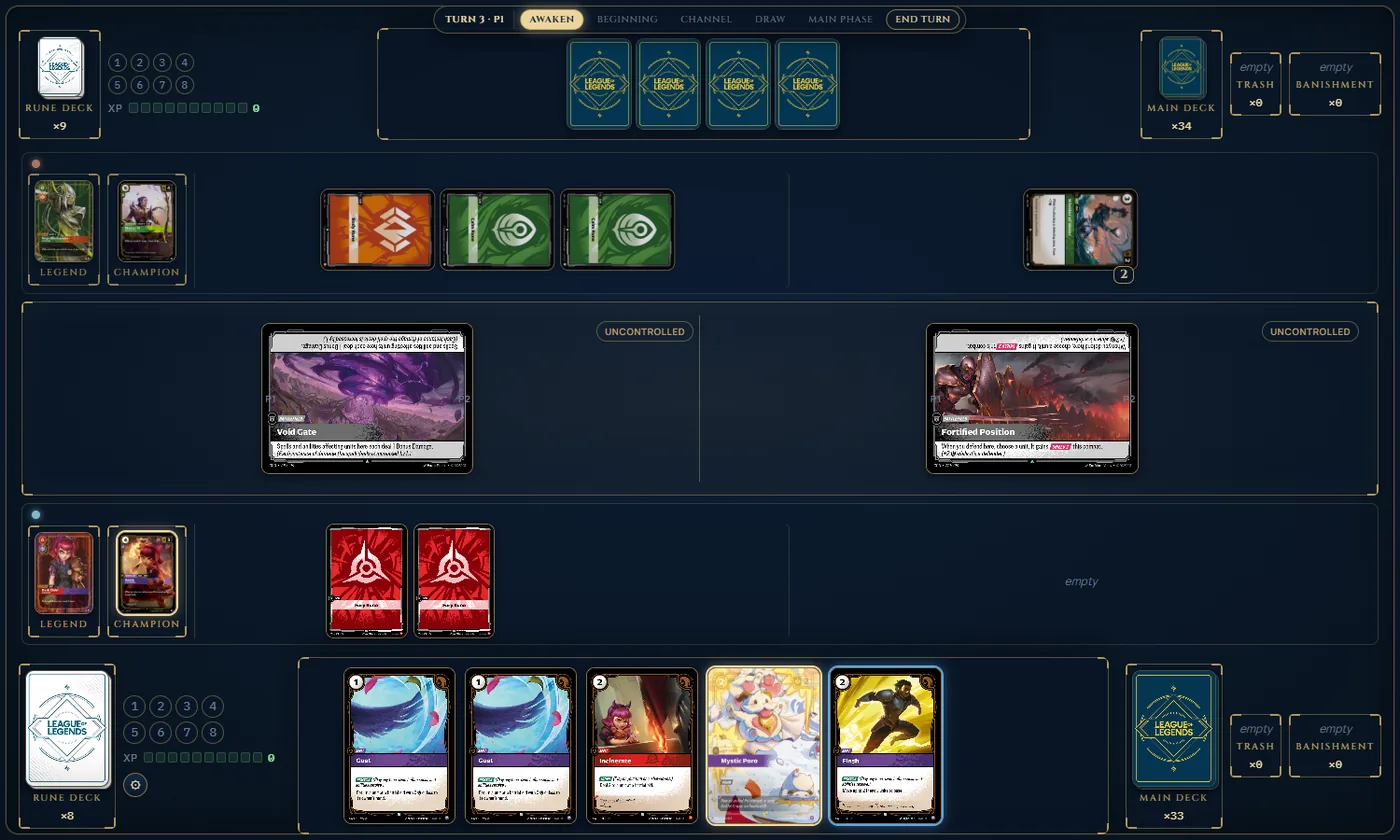
Awaken, Beginning, Channel, Draw — done for you
The start-of-turn phases resolve on their own. You act in the Main Phase, and whenever the game asks.
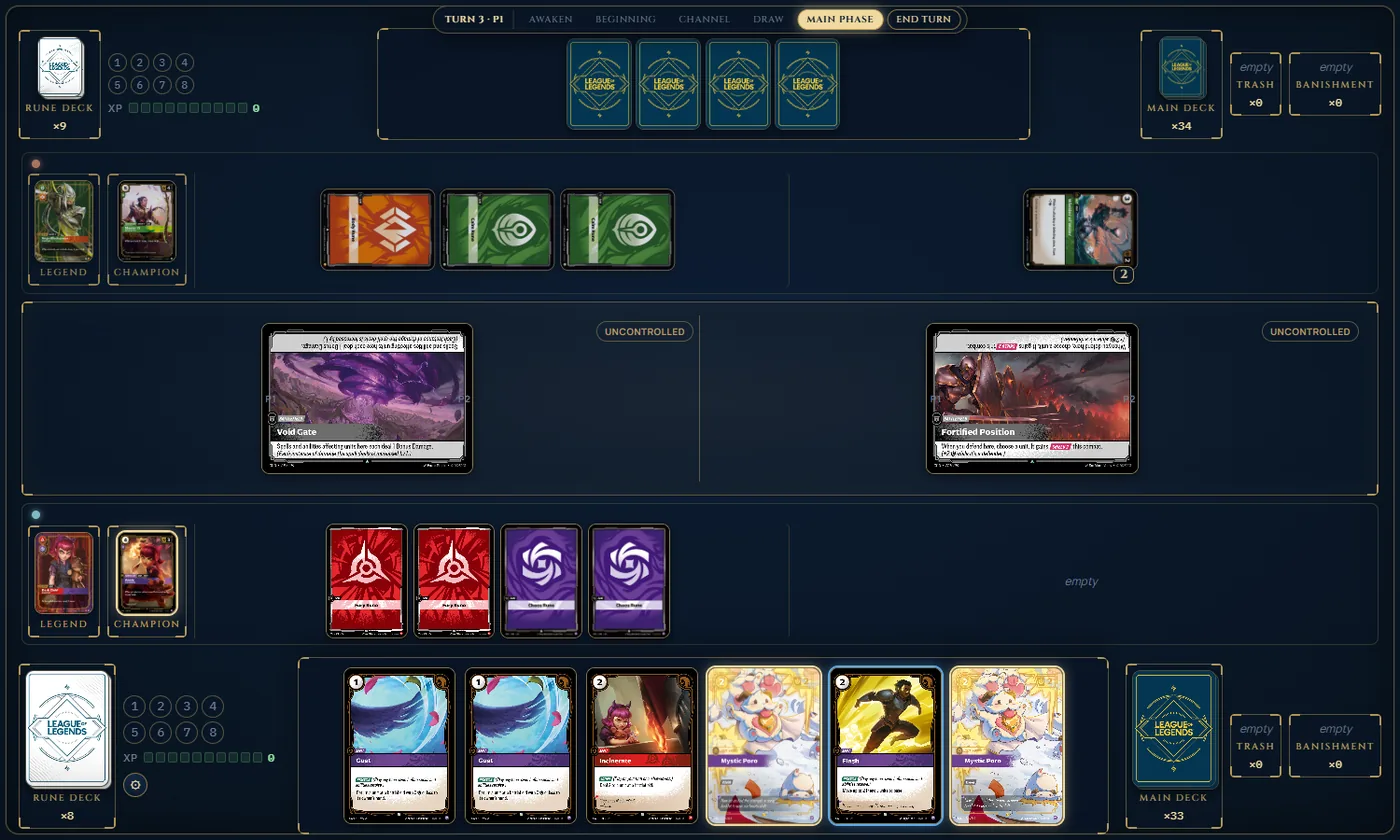
If it isn’t lit, it isn’t legal
Playable cards ring gold, spells blue; units that can move glow. Pick one up and its destinations and targets light up.
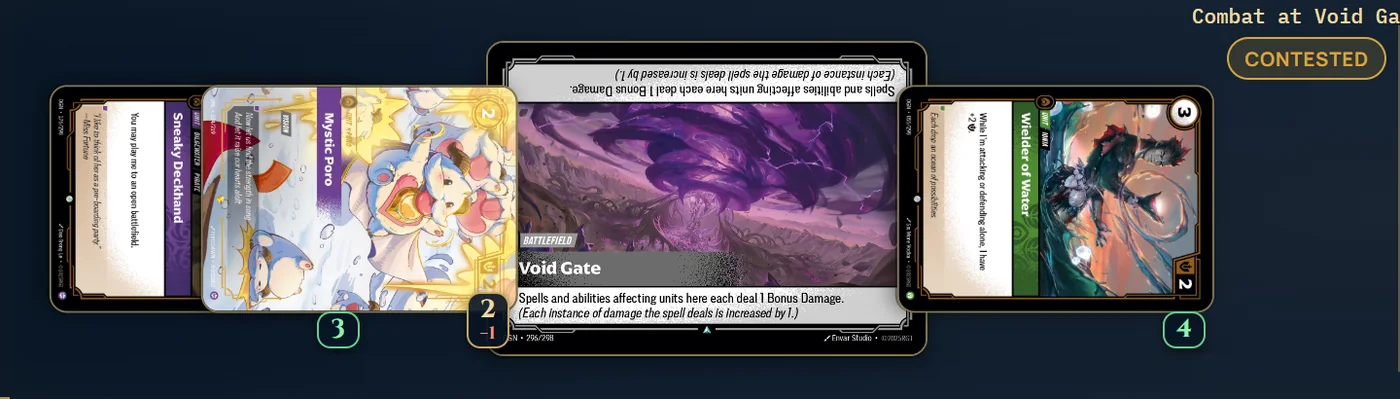
The numbers do themselves
Buffs, Assault, Shield, Legends, Battlefields: every unit’s true Might is on its badge — green when raised, red when lowered — with damage marked beneath. Combat totals and lethal are worked out for you.
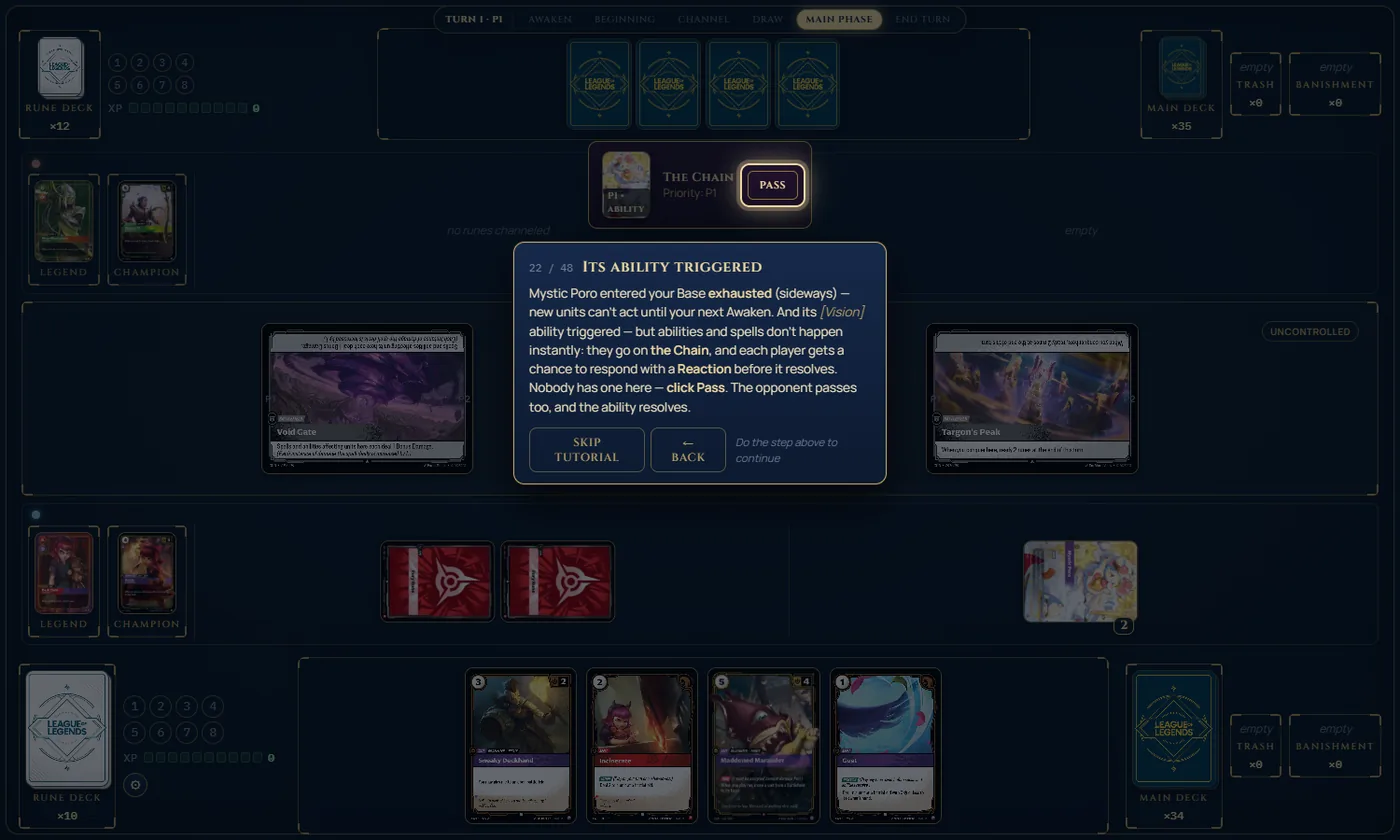
Triggers, priority, resolution — handled
Abilities go on the Chain by themselves, priority passes in order, and items resolve last-in-first-out. You just Pass, React, or answer a choice when one comes up.
Choose where your damage lands
Each side’s Might is totalled for you; you decide which enemy units take it — lethal in full, Tanks first. The tutorial walks you through one real trade.
Then play for real
Once the tutorial has shown you the table, build your own deck and take it into a full game against the built-in opponent.
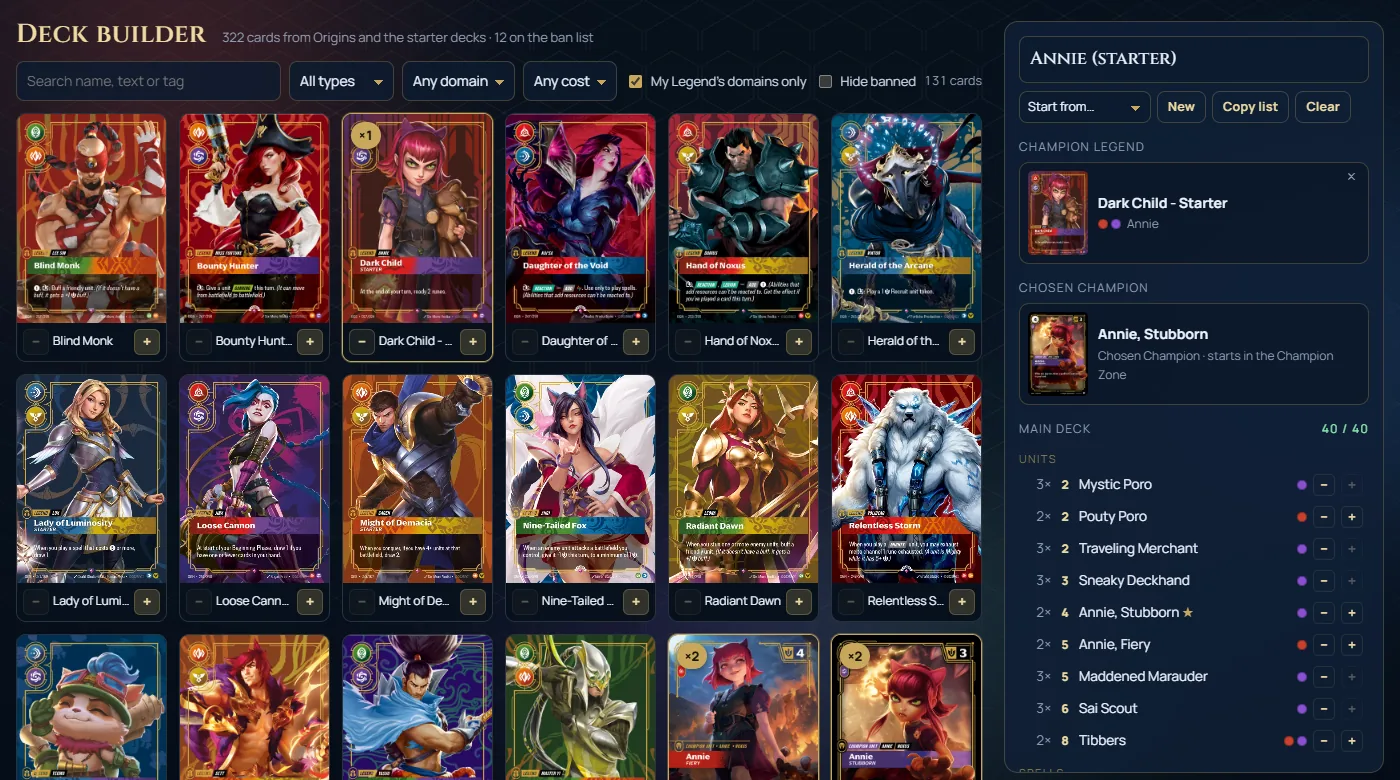
Build a legal deck, step by step
All 322 Origins and Proving Grounds cards plus Spiritforged, Unleashed and Vendetta (Equipment, Repeat, XP and Levels, Empower, Flow — every card of every set, played as printed), with the official ban list marked. It walks you through it — Legend, then a Champion Unit, then 40 cards, then battlefields — and checks the rules as you go: domain identity, copies, Signature cards, runes. Cost curve and domain split at a glance. Import and export lists in the usual text format; sign in to keep your decks.
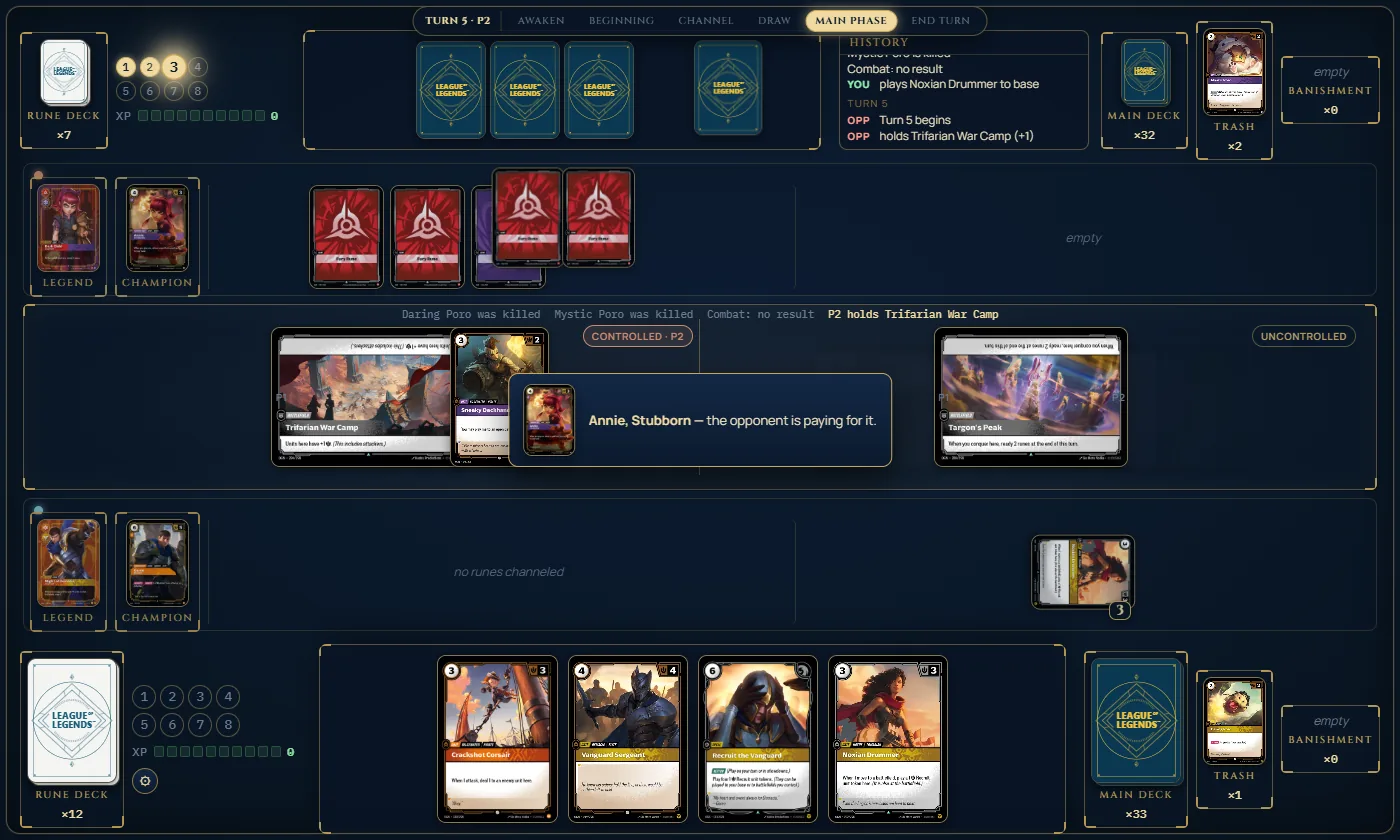
Play it against the built-in opponent
A full game to 8 points against Annie, Garen, Master Yi or Lux, played by the same opponent the tutorial uses. A d20 roll decides who chooses to go first; every play, move and score lands in the History panel; big units shake the ground when they land, and the table itself says who won. Surrender from the menu if it's not your day.
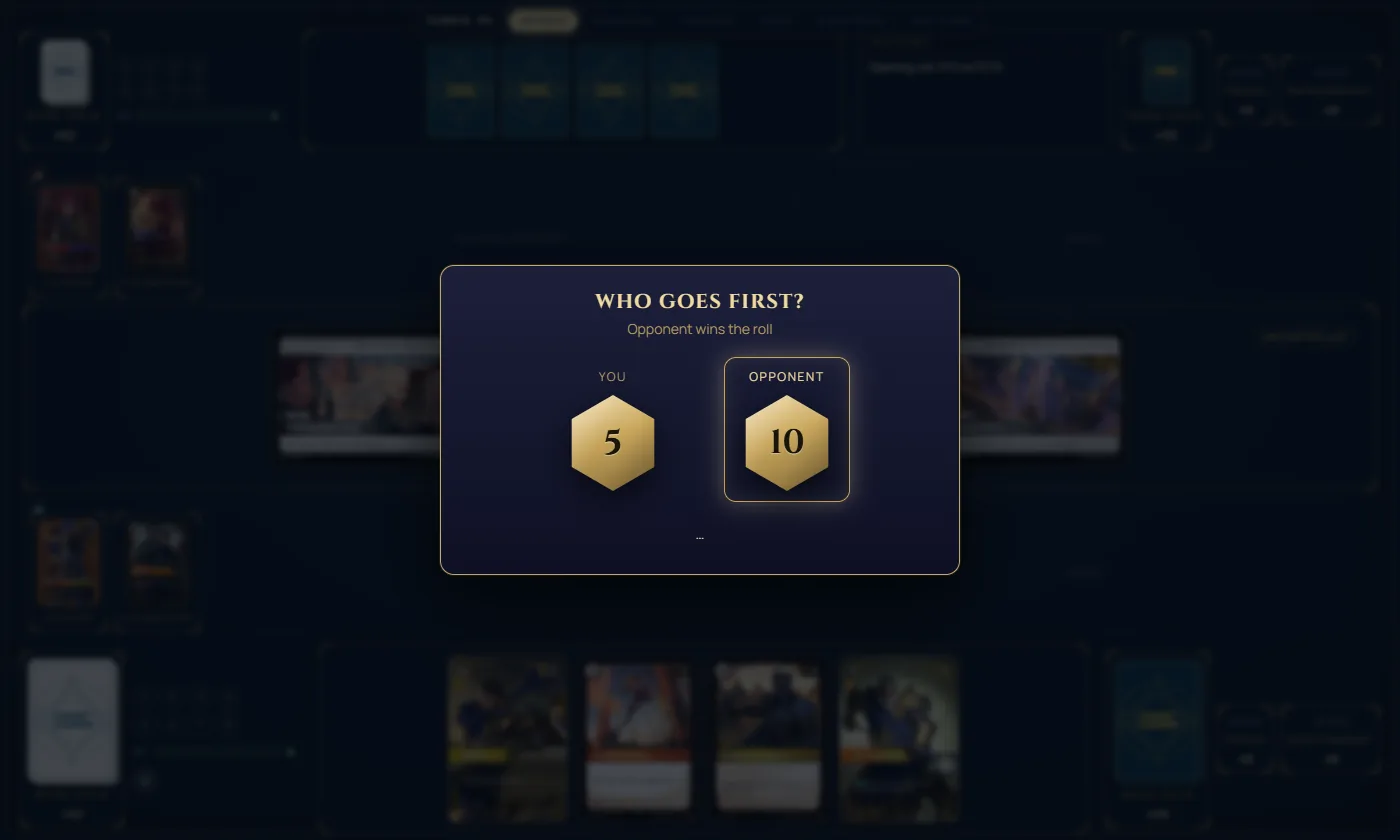
From the opening roll to the last point
The engine runs every rule the tutorial taught and the ones it didn't have room for: the opening roll, mulligans, the Chain, Showdowns, Hold and Conquer, Signature and Unique cards, and 316 scripted Origins cards. What you build is exactly what gets played.
Ready to sit down at the table?
Start the tutorialWorks best on a desktop or laptop screen. Takes about 15 minutes. Then build a deck and play Normal 1v1 against the built-in opponent.
Rift Table is free and has no ads. The server, the domain and the late nights come out of my pocket; if it's helped you learn the game, a pack's worth keeps it running and maintained. Thank you.